
Experiential Learning at Scottish High International School
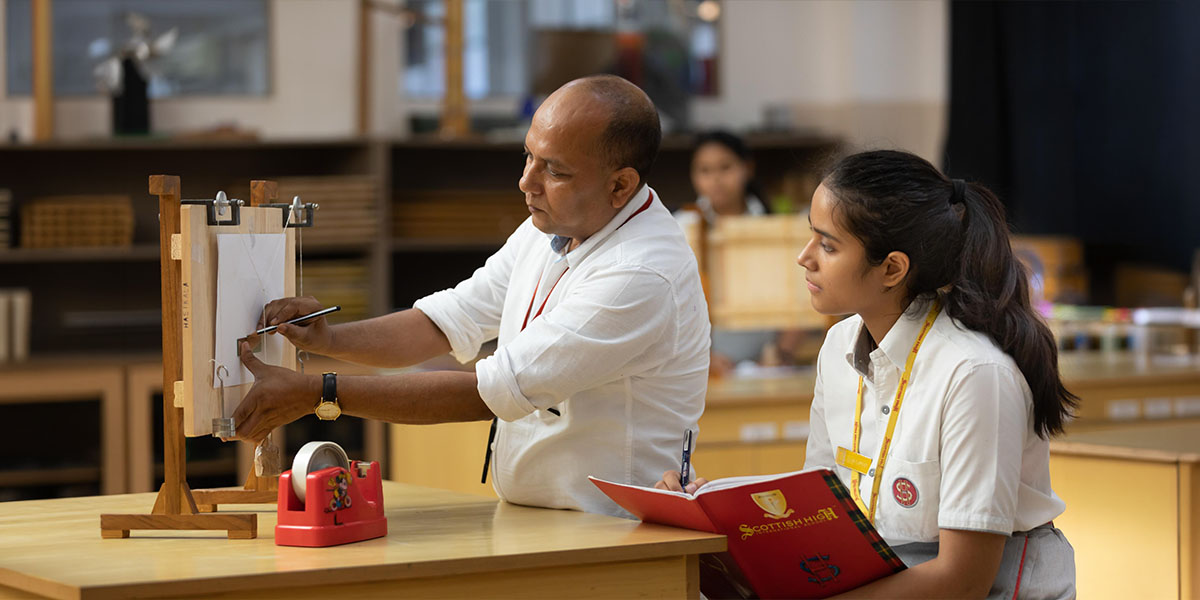
At Scottish High International School, we strongly believe in learning by doing. Across all subjects, students engage in a variety of hands-on activities, laboratory experiments, field visits, and collaborative projects that deepen their understanding of concepts and encourage meaningful learning.
For instance, in History, role plays and simulations bring historical events to life, helping students develop empathy, critical thinking, and a lasting connection with the subject. In Science and Mathematics, experiments, models, investigations, and real-world applications enable students to explore concepts beyond textbooks and understand how learning applies to everyday life.
Every chapter is thoughtfully supported with activities that make learning practical, engaging, and enjoyable, fostering curiosity, creativity, and confidence in every Highlander.
What is Experiential Learning?
Experiential learning is a teaching approach where students gain knowledge through direct experiences, reflection, and practical application. Instead of only reading about concepts, learners investigate, create, experiment, solve problems, and collaborate to develop a deeper understanding.
At Scottish High, every lesson is designed to encourage students to ask questions, think independently, and discover solutions through hands-on learning.
Learning by Doing Across Every Subject
Science
Students conduct laboratory experiments, design investigations, build scientific models, and analyse observations to understand scientific principles. Practical experiments encourage inquiry, innovation, and evidence-based thinking.
Mathematics
Mathematics becomes meaningful through activities, manipulatives, puzzles, measurement exercises, financial literacy projects, and real-life problem-solving that help students apply mathematical concepts confidently.
Social Studies & History
Historical events come alive through role plays, debates, simulations, heritage walks, research projects, and interactive classroom activities. Students explore different perspectives while developing analytical and communication skills.
Languages
Language learning extends beyond textbooks through storytelling, creative writing, theatre, public speaking, reading programmes, collaborative discussions, and literary activities that strengthen communication skills.
Arts & Design
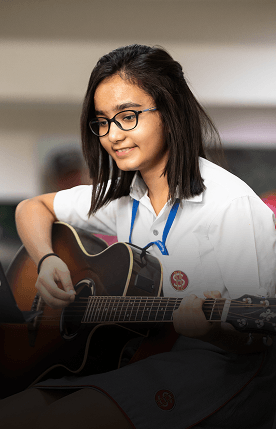
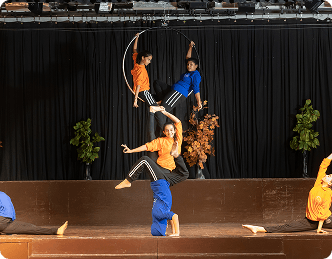
Students express their creativity through visual arts, music, dance, theatre, and design-thinking projects that nurture imagination, innovation, and self-expression.
Technology & Robotics
Digital tools, coding, robotics, artificial intelligence, and STEM activities enable students to become confident creators, innovators, and responsible digital citizens.